The Complete Guide to Air Damper Types: Volume, Fire, Smoke, Backdraft & Motorized Dampers Explained
Category : Blog
Every HVAC system, ventilation network, and smoke control installation depends on air dampers to regulate, direct, and — when necessary — stop the movement of air through ductwork. Despite their critical role, air dampers are among the most frequently misunderstood components in building mechanical systems. Engineers and facility managers often specify dampers based on habit or price rather than a rigorous evaluation of the damper’s function, rating, and compatibility with the application. The consequences of a mismatched air damper range from inefficient airflow balancing and wasted fan energy to catastrophic fire spread through unprotected duct penetrations.
The world of air dampers encompasses a broad spectrum of types, each engineered for a specific purpose. Volume control dampers regulate airflow rate for system balancing. Fire dampers stop the passage of flame through fire-rated barriers. Smoke dampers resist the passage of smoke to maintain tenable evacuation conditions. Backdraft dampers prevent reverse airflow in exhaust and gravity systems. Motorized dampers enable automated, remote, and building-management-integrated control. Understanding the differences between these hvac damper types and functions — their construction, ratings, installation requirements, and maintenance needs — is essential for anyone responsible for specifying, installing, or maintaining ductwork systems. This guide provides a complete reference across all major air damper types, with practical selection criteria, code requirements, and lifecycle considerations drawn from leading industry standards.
Understanding Air Damper Fundamentals: Function, Structure, and Classification
What Is an Air Damper and How Does It Control Airflow in HVAC Systems
An air damper is a mechanical device installed inside or at the termination of a duct that controls the volume, direction, or passage of air by opening, closing, or modulating a set of blades (also called vanes or louvers) within a frame. When the blades are fully open, air passes through the duct with minimal restriction. When fully closed, the blades seal against the frame and each other to block airflow. At intermediate positions, the air damper modulates the flow rate, creating a variable resistance that the system fan must overcome.
In HVAC systems, air dampers serve multiple functions simultaneously. They balance airflow distribution across branch ducts, ensuring that each zone receives its designed supply volume. They modulate supply and return air to match real-time heating and cooling loads in variable air volume (VAV) systems. They isolate duct sections during maintenance or zone shutdown. And in life safety applications, they automatically close to prevent fire and smoke from spreading through the duct network to other building compartments. The automatic damper types used in modern buildings are sophisticated mechanical assemblies that must meet stringent performance, leakage, and durability standards defined by organizations such as UL (Underwriters Laboratories) and ASHRAE. Selecting the wrong type — or installing the right type incorrectly — can compromise the entire system’s performance and safety.
Key Components of an Air Damper: Blades, Frames, Linkages, and Actuators
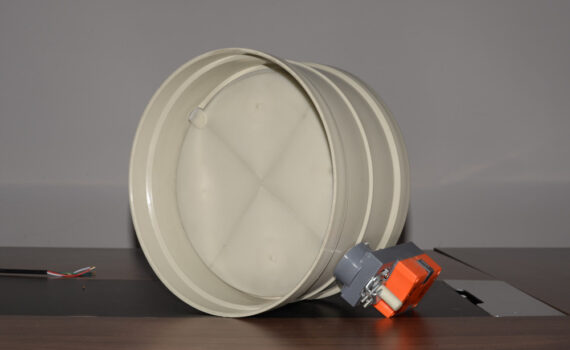
Every air damper, regardless of type, consists of four fundamental components that work together to control airflow. The frame is the structural housing that mounts inside or on the duct, providing the sealing surface against which the blades close. Frames are typically constructed from galvanized steel, stainless steel, aluminum, or — for corrosive environments — polypropylene or other thermoplastics. The frame must be rigid enough to resist duct pressure without deflection, as any distortion creates gaps that leak air even when the damper is fully closed.
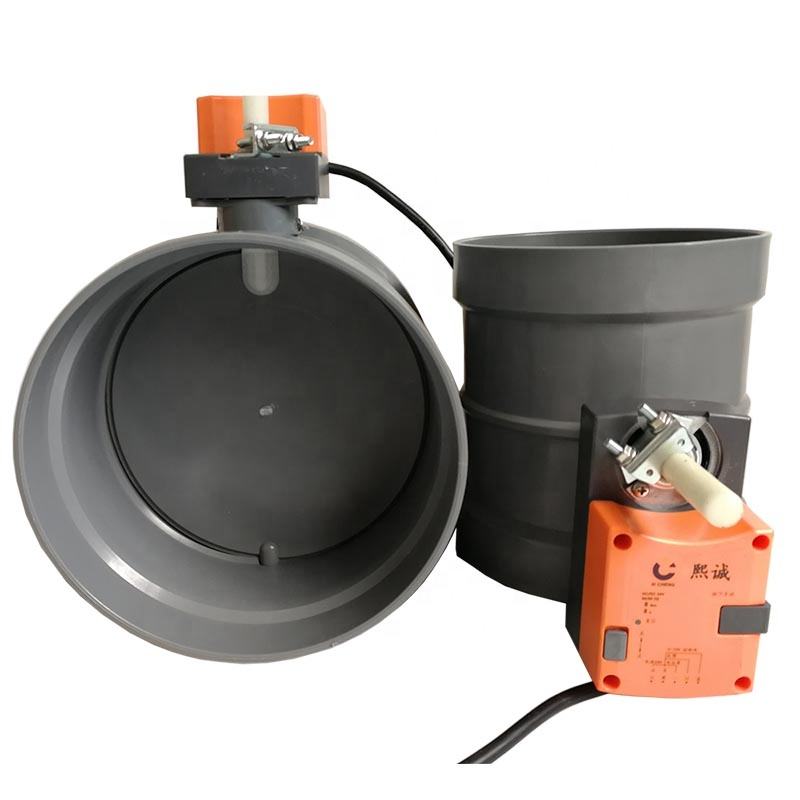
The blades are the movable elements that rotate within the frame to open or close the airflow path. Blade design varies by damper type: parallel blades rotate in the same direction and are used in volume damper vs balancing damper applications where low leakage is less critical; opposed blades rotate in opposite directions, creating a tighter seal and providing more linear flow control, making them preferred for modulating applications. Each blade is fitted with a seal — typically an elastomeric gasket or metal edge seal — that contacts the frame and adjacent blades when the damper is closed, minimizing leakage. The linkage connects all blades to a common operating shaft, ensuring synchronized rotation. Linkages may be internal (concealed within the frame) or external (mounted on the frame exterior), and they transmit the actuating force from the operator to the blades. The actuator provides the motive force to open and close the damper. Actuators may be manual (lever or hand quadrant), electric (motor-driven), pneumatic (cylinder-operated), or fusible-link-activated (for fire dampers). The choice of damper actuator types depends on the application: manual actuators for simple balancing, electric or pneumatic for automated control, and fusible links for life safety functions.
Air Damper Classification by Function: Control Dampers, Life Safety Dampers, and Combination Dampers
Air dampers are classified into three broad functional categories, each governed by different standards and code requirements. Control dampers — including volume control dampers and modulating dampers — are designed to regulate airflow under normal operating conditions. They are rated for leakage class per ASHRAE Standard 171 (formerly AMCA 500-D), with leakage classes ranging from Class I (lowest leakage, ≤3 CFM/ft² at 1″ w.g.) to Class IV (highest acceptable leakage for general HVAC). Control dampers are not rated for fire resistance and must not be used as substitutes for fire or smoke dampers.
Life safety dampers — including fire dampers, smoke dampers, and combination fire smoke dampers — are designed to protect building occupants by preventing the spread of fire and smoke through duct penetrations in fire-rated barriers. These dampers are tested and listed by UL under specific standards: UL 555 for fire dampers, UL 555S for smoke dampers, and UL 555C for combination fire smoke dampers. They must be installed in compliance with NFPA 80 (fire dampers) and NFPA 105 (smoke dampers). Combination dampers integrate both control and life safety functions in a single assembly — for example, a combination fire smoke damper that modulates airflow during normal operation and closes automatically upon detection of fire or smoke. The following table summarizes this classification:
| Category | Function | Key Standard | Rating System | Typical Application |
|---|---|---|---|---|
| Control Dampers | Airflow regulation and balancing | ASHRAE 171 / AMCA 500-D | Leakage Class I–IV | HVAC ductwork, VAV systems |
| Fire Dampers | Block flame passage through fire barriers | UL 555 / NFPA 80 | Fire rating (1.5 hr, 3 hr) | Duct penetrations in fire walls |
| Smoke Dampers | Block smoke passage through smoke barriers | UL 555S / NFPA 105 | Leakage Class I at 250°F | Smoke compartments, stairwells |
| Combination Dampers | Fire + smoke protection in one unit | UL 555C | Fire + smoke rating | High-rise buildings, hospitals |
Air Damper Types Explained: Volume, Fire, Smoke, Backdraft, and Motorized Dampers
Volume Control Dampers: Regulating Airflow Rate and Balancing Duct Systems
Volume control dampers are the most common type of air damper in HVAC systems and are installed at branch takeoffs, main duct sections, and individual zone connections to regulate airflow distribution. The volume damper vs balancing damper distinction is often confused, but they serve different purposes: a volume control damper is a general-purpose damper used to adjust flow in any duct section, while a balancing damper is a precision instrument with a calibrated blade position indicator, designed specifically for system air balancing per ASHRAE Standard 111. Balancing dampers allow the commissioning engineer to set and lock each branch to its designed airflow volume, ensuring that the system delivers the correct amount of air to every zone.
Volume control dampers are available in parallel-blade and opposed-blade configurations. Parallel-blade dampers are simpler and less expensive but provide less linear flow control and higher leakage at partial closure. Opposed-blade dampers offer more uniform airflow distribution across the duct cross-section and better modulation characteristics, making them preferred for VAV applications where the damper must operate at intermediate positions for extended periods. Leakage performance is critical: ASHRAE 171 defines four leakage classes, with Class I representing the tightest seal (≤3 CFM/ft² at 1″ w.g.) and Class IV the loosest (≤30 CFM/ft²). For energy-efficient systems, Class I or II dampers are recommended to minimize the conditioned air wasted through closed or partially closed dampers.
Fire Dampers and Smoke Dampers: How They Protect Life Safety and Building Integrity
Fire dampers and smoke dampers are life safety devices that activate automatically to prevent the spread of fire and smoke through duct penetrations in fire-rated walls, floors, and partitions. The fire damper vs smoke damper difference is fundamental: a fire damper is designed to stop the passage of flame and is activated by a fusible link that melts at a rated temperature (typically 165°F / 74°C or 212°F / 100°C), slamming the damper blades closed. Fire dampers are tested per UL 555 and are rated for 1.5-hour or 3-hour fire endurance, matching the fire rating of the barrier they protect. They are required at every duct penetration through a fire-rated barrier per NFPA 80 and the International Building Code (IBC).
A smoke damper, by contrast, is designed to resist the passage of smoke — which kills more people in fires than flame itself. Smoke dampers are activated by smoke detection devices (photoelectric or ionization detectors) or by signals from the building fire alarm system, and they must close within approximately 75 seconds of activation. They are tested per UL 555S for leakage at elevated temperatures (250°F / 121°C) and must achieve Leakage Class I to prevent smoke migration through the closed damper. Smoke dampers are required at duct penetrations through smoke barriers — boundaries that divide a building into smoke compartments to maintain tenable evacuation conditions. The following table compares fire dampers and smoke dampers across key parameters:
| Parameter | Fire Damper | Smoke Damper |
|---|---|---|
| Primary Function | Block flame | Block smoke |
| Activation Method | Fusible link (thermal) | Smoke detector or fire alarm signal |
| Activation Temperature | 165°F or 212°F (link dependent) | N/A (signal-activated) |
| Closing Time | Immediate upon link failure | ≤75 seconds upon signal |
| UL Standard | UL 555 | UL 555S |
| Fire Endurance Rating | 1.5 hr or 3 hr | N/A (smoke resistance only) |
| Leakage Requirement | Per UL 555 | Class I at 250°F per UL 555S |
| Code Reference | NFPA 80 / IBC | NFPA 105 / IBC |
Backdraft Dampers and Motorized Dampers: Preventing Reverse Airflow and Enabling Automated Control
Backdraft dampers serve a unique and essential function: they prevent reverse airflow in duct systems where gravity, wind pressure, or system shutdown could cause air to flow backward through the duct. The backdraft damper how it works principle is simple: the blades are mounted on a horizontal or inclined axis and are held closed by gravity or a light spring. When airflow in the intended direction exceeds the blade’s cracking pressure (typically 0.05–0.15 in. w.g.), the blades open and allow air to pass. When the driving pressure ceases or reverses, the blades fall closed under their own weight, blocking backflow. Backdraft dampers are installed in exhaust duct terminations, gravity exhaust systems, kitchen hood exhausts, and toilet exhaust risers where reverse flow could introduce contaminated air back into the building.
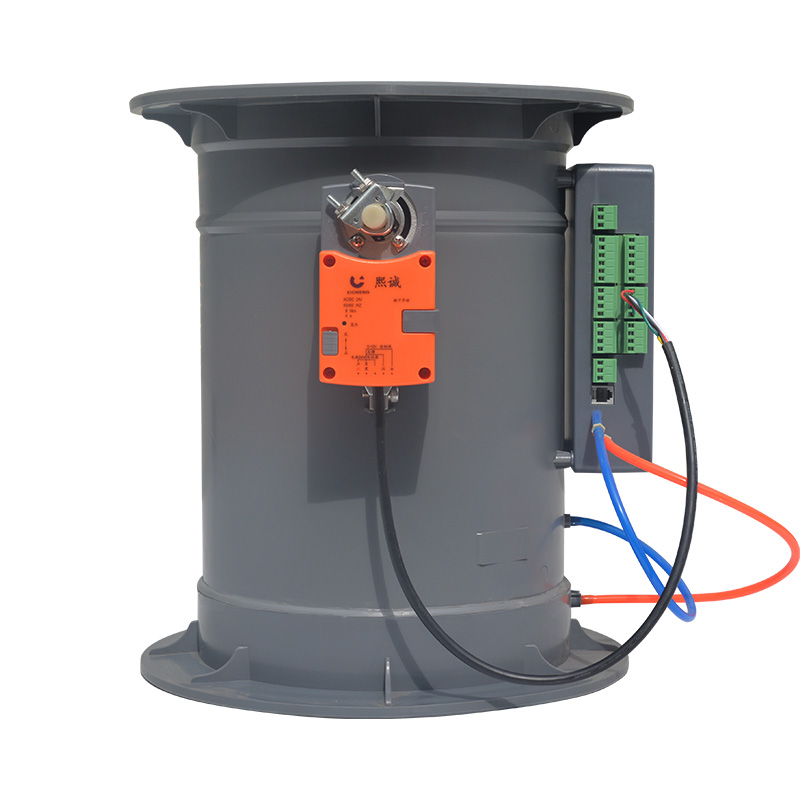
Motorized dampers — the motorized damper vs manual damper comparison is one of the most common specification decisions — use electric or pneumatic actuators to open, close, or modulate the blades in response to signals from a building automation system (BAS), thermostat, or fire alarm panel. Electric actuators are the most common, available in two-position (open/close), three-position, and modulating (proportional) configurations. Pneumatic actuators are used in facilities with existing compressed air infrastructure and offer fast response times. Motorized dampers are essential for VAV systems, economizer cycles (where outdoor air dampers modulate to provide free cooling), smoke management systems, and any application requiring remote or automated airflow control. Actuator selection depends on the required torque (which must exceed the damper’s operating torque at maximum system pressure), control signal type (on/off, 0–10V, 2–10V, or BACnet), and fail-safe position (open or closed upon power loss).
Selecting, Installing, and Maintaining the Right Air Damper for Your Application
How to Choose the Right Air Damper Type: Media, Temperature, Pressure, and Code Requirements
Selecting the correct air damper requires a systematic evaluation of five interdependent criteria. First, function determines the damper category: volume control, fire protection, smoke control, backdraft prevention, or automated modulation. Second, media compatibility dictates the body and blade material: galvanized steel for standard air, stainless steel for corrosive or high-humidity environments, and polypropylene or FRP for chemical exhaust systems. Third, temperature rating must exceed the maximum air temperature in the duct: standard dampers are rated to 250°F (121°C), high-temperature dampers to 500°F (260°C), and specialty dampers to 1000°F+ (538°C+). Fourth, pressure rating must accommodate the maximum system static pressure, including fan surge conditions.
Fifth, code requirements must be satisfied. UL rated damper types — including UL 555, UL 555S, and UL 555C listed dampers — are mandatory for life safety applications and must be installed exactly as tested and listed, including specific orientation, clearance, and mounting requirements. The following checklist summarizes the selection process:
| Selection Criterion | Key Question | Typical Options |
|---|---|---|
| Function | What is the damper’s primary purpose? | Volume, fire, smoke, backdraft, motorized |
| Media | What gas or air does the duct carry? | Standard air, exhaust, chemical fumes |
| Temperature | What is the max air temperature? | 250°F, 500°F, 1000°F+ |
| Pressure | What is the max duct static pressure? | 1–10 in. w.g. typical |
| Code / Rating | Is a UL listing required? | UL 555, UL 555S, UL 555C, or none |
| Actuator Type | Manual, electric, pneumatic, or fusible? | Per automation and safety requirements |
| Leakage Class | How tight must the closed seal be? | Class I–IV per ASHRAE 171 |
Air Damper Installation Best Practices: Placement, Mounting, and Sealing Guidelines
Proper installation is as important as proper selection — a UL rated damper type installed incorrectly loses its listing and fails to provide the intended protection. Fire dampers must be installed within the thickness of the fire-rated barrier they penetrate, oriented exactly as tested (horizontal or vertical), with the specified clearances between the damper frame and the barrier opening. The fusible link must be accessible for inspection and replacement. Smoke dampers must be installed with their actuator accessible for testing and must be connected to the building fire alarm system through approved relay or control panel interfaces.
For volume control and balancing dampers, installation best practices include mounting the damper at least three duct diameters downstream of any elbow, tee, or fan discharge to ensure uniform airflow across the blades. The damper must be supported independently of the duct to prevent differential movement from stressing the frame or linkage. All duct connections must be sealed with mastic or gasket to prevent leakage around the frame — a common source of energy waste that is invisible during operation but significant over the system’s life. For motorized dampers, the actuator must be mounted with adequate clearance for maintenance access, and wiring must be routed in conduit or plenum-rated cable per local electrical codes. The damper’s fail-safe position (open or closed upon power loss) must be specified during design and verified during commissioning.
Air Damper Maintenance, Inspection Schedules, and Common Failure Modes to Watch For
Air dampers require regular inspection and maintenance to remain functional, yet they are among the most neglected components in building mechanical systems — largely because they are hidden inside ductwork and out of sight. Life safety dampers are subject to mandatory inspection requirements: NFPA 80 and NFPA 105 require fire and smoke dampers to be inspected and tested one year after installation and then at intervals not exceeding four years (or six years for hospitals). Failure to comply voids the damper’s listing and exposes the building owner to liability.
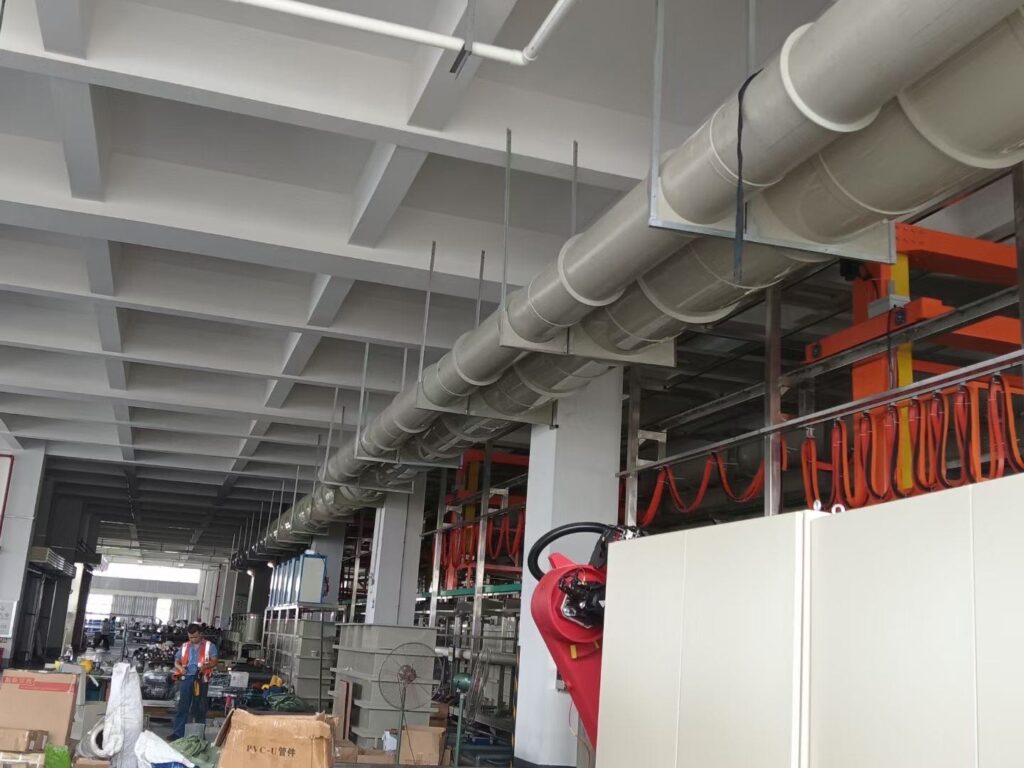
Control dampers and motorized dampers should be inspected annually. The inspection protocol includes verifying that all blades open and close fully, checking linkage tightness and alignment, testing actuator operation through its full stroke, inspecting seals for wear or chemical degradation, and confirming that the damper’s leakage performance has not deteriorated. Common failure modes include seized blades (caused by corrosion, paint buildup, or debris accumulation), broken linkage pins (from fatigue or over-torque), failed actuators (motor burnout or pneumatic diaphragm rupture), degraded seals (from chemical attack or UV exposure), and corroded frames (particularly in outdoor or corrosive exhaust applications). For corrosive environments where metal dampers fail prematurely, polypropylene and FRP air damper alternatives offer dramatically extended service life due to their inherent chemical resistance. A disciplined inspection schedule, documented in a maintenance log, ensures that every air damper in the system continues to perform its intended function — whether that is balancing airflow, preventing fire spread, or enabling automated control — throughout the building’s operational life.