
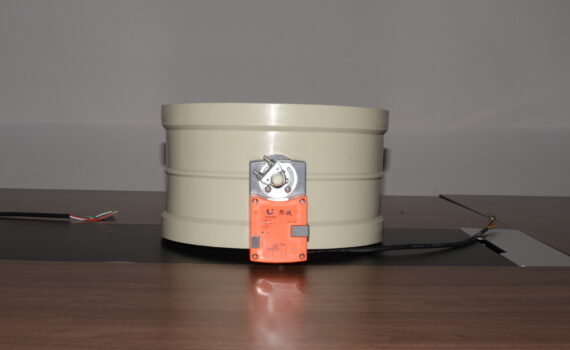
Motorized Air Damper Valve: Electric Actuator vs. Pneumatic Actuator Selection Guide
Category : Blog
In modern building automation and industrial process control, motorized air damper valves have become indispensable components for regulating airflow with precision, reliability, and remote operability. The choice between electric and pneumatic actuation represents one of the most critical decisions in specifying these systems, as it directly impacts response speed, control accuracy, installation cost, maintenance requirements, and long-term operational reliability. While electric actuators offer seamless integration with digital building management systems and require only power wiring, pneumatic actuators deliver lightning-fast response times and inherent fail-safe capabilities through spring-return mechanisms. Understanding the fundamental differences between these two actuation technologies — and how they align with specific application requirements — is essential for engineers, facility managers, and procurement specialists tasked with selecting the right motorized air damper valve solution.
This comprehensive guide examines the operating principles, performance characteristics, and application suitability of electric and pneumatic actuators for air damper valve control. It provides a detailed comparison of key parameters such as torque output, response speed, duty cycle, and fail-safe options, alongside practical selection criteria based on system requirements, environmental conditions, and budget constraints. By the end of this article, readers will have a clear framework for evaluating and selecting the optimal actuator type for their motorized air damper valve applications, whether for commercial HVAC systems, industrial process ductwork, fire and smoke control, or cleanroom environments.
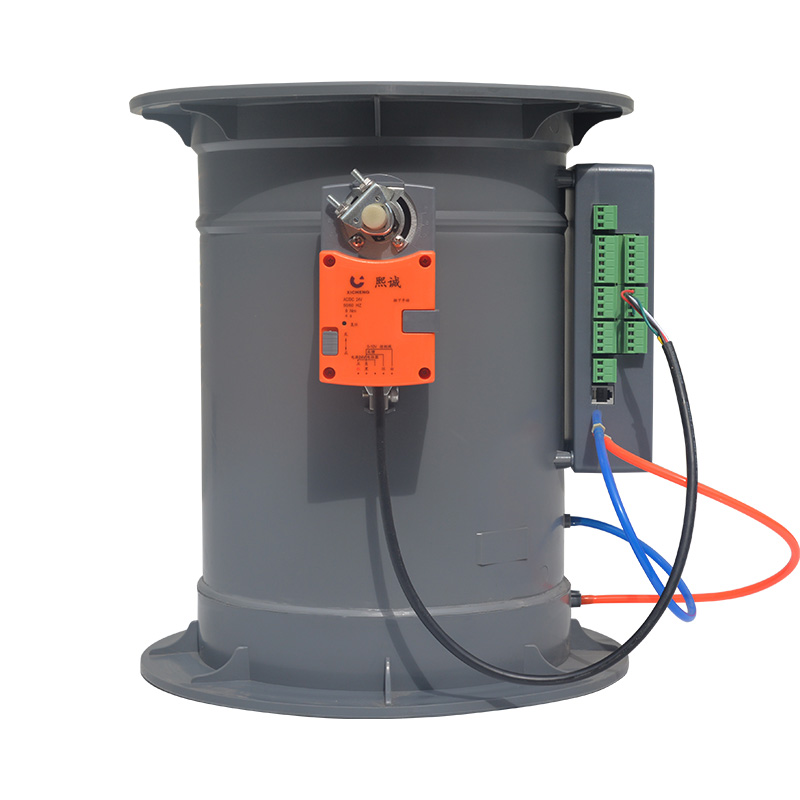
Understanding Motorized Air Damper Valves: How Actuators Control Airflow
What Is a Motorized Air Damper Valve and How Does It Differ from Manual Damper Valves
A motorized air damper valve is a mechanical device installed in ductwork that controls airflow by opening, closing, or modulating a set of blades using an automated actuator. Unlike manual damper valves, which require physical intervention by personnel to adjust blade position via a hand lever, quadrant, or chain operator, motorized air damper valves can be controlled remotely through building automation systems, programmable logic controllers, or simple on/off switches. This automation capability enables dynamic airflow regulation based on real-time conditions such as temperature, pressure, occupancy, or process requirements, without the need for constant human oversight.
The fundamental difference between motorized and manual air damper valves lies in the actuation mechanism and control philosophy. Manual dampers are typically set during commissioning and left in a fixed position, with occasional adjustments made during maintenance or system rebalancing. In contrast, motorized dampers can continuously modulate to match changing loads, respond automatically to fire or smoke detection signals, and be integrated into complex control sequences that optimize energy efficiency and occupant comfort. For applications requiring frequent adjustment, precise positioning, or emergency response — such as variable air volume systems, smoke control zones, or process exhaust systems — motorized air damper valves are the preferred solution. The actuator itself is the “brain” of the system, converting electrical or pneumatic energy into the precise rotational motion required to drive the damper blades to their target position.
How Electric and Pneumatic Actuators Convert Energy into Precise Air Damper Valve Movement
Electric and pneumatic actuators convert different forms of energy into the mechanical torque required to rotate the damper blade shaft, but their operating principles are fundamentally distinct. An electric actuator uses an electric motor to drive a gearbox that reduces speed and increases torque, translating electrical energy into controlled rotational motion. The motor is controlled by an input signal — commonly 0-10V, 4-20mA, 2-10V, or digital protocols like Modbus or BACnet — that specifies the desired blade position. The actuator’s internal electronics compare the actual position with the target position and adjust the motor accordingly until the error is minimized.
A pneumatic actuator, by contrast, uses compressed air as its energy source. The most common type is the rack-and-pinion design, where compressed air enters a cylinder and pushes against a piston, which drives a rack gear that rotates the pinion gear attached to the damper shaft. Spring-return pneumatic actuators include a mechanical spring that automatically drives the damper to a safe position when air supply is lost — a critical feature for fire and smoke control applications. Pneumatic actuators are controlled by solenoid valves that direct air flow to one side by a separate positioner or sensor. The key advantage of pneumatic actuation is the high force density and rapid response, while electric actuation excels in precision and ease of integration with digital control systems.
Key Actuator Performance Parameters: Torque Output, Speed, Duty Cycle, and Fail-Safe Options
When selecting a motorized air damper valve actuator, four performance parameters are critical: torque output, rotational speed, duty cycle, and fail-safe capability. Torque output — measured in Newton-meters — must exceed the maximum torque required to move the damper blade against the differential pressure acting across it, with a safety margin typically of 1.5 to 2.0 times. Under-sizing the actuator results in incomplete blade travel, premature motor burnout, or seized dampers. Rotational speed — measured in seconds per 90-degree stroke — determines how quickly the damper can respond to control signals. Electric actuators typically require 15 to 60 seconds for a full stroke, while pneumatic actuators can complete the same motion in 1 to 5 seconds.
Duty cycle defines the percentage of time the actuator can operate continuously without overheating or exceeding its service life. Standard actuators are rated for 50% to 100% duty cycle, with continuous modulation requiring 100% duty cycle ratings. Fail-safe options are essential for life safety applications, as defined by NFPA 90A and the International Mechanical Code (IMC). Spring-return pneumatic actuators provide inherent fail-safe operation, while electric actuators require battery backup, supercapacitors, or mechanical spring systems to achieve the same function. The following table summarizes typical actuator performance ranges:
| Parameter | Electric Actuator | Pneumatic Actuator |
|---|---|---|
| Torque Range | 10 to 500+ Nm | 10 to 2000+ Nm |
| Stroke Time (90°) | 15 to 60 seconds | 1 to 5 seconds |
| Duty Cycle | 25% to 100% | 100% (continuous operation) |
| Fail-Safe Options | Spring return, battery backup | Spring return (inherent) |
| Control Signal | 0-10V, 4-20mA, Modbus, BACnet | Solenoid valve, positioner |
| Power Requirement | 24VAC/DC, 120VAC, 240VAC | Compressed air 40-80 psi |
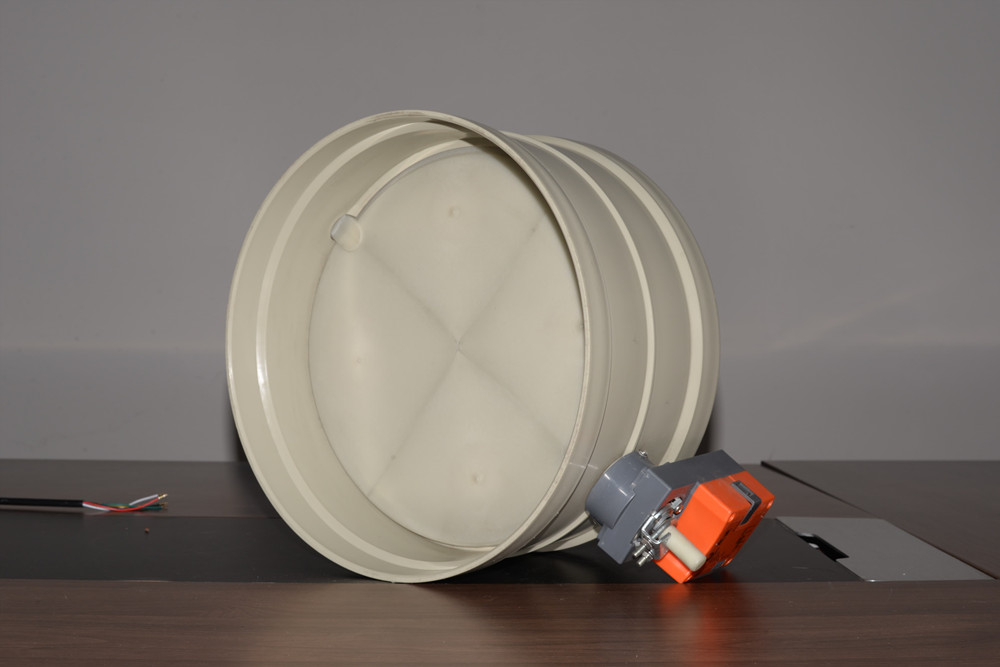
Electric Actuator vs. Pneumatic Actuator: How They Work and Where Each Excels
Electric Actuator Air Damper Valves: Operating Principle, Power Requirements, and Control Signal Compatibility
Electric actuator air damper valves are the dominant choice in commercial building HVAC systems due to their ease of integration with digital building management systems and their minimal infrastructure requirements. An electric actuator operates by converting electrical energy into mechanical torque through a motor and gearbox assembly. The motor receives a control signal from the BMS or local controller, and the actuator’s internal circuitry drives the motor to the commanded position, using feedback from a position sensor to ensure accuracy. This closed-loop control enables precise modulation of damper blade position, making electric actuators ideal for applications requiring fine control of airflow, such as VAV terminal units, economizer dampers, and zone control dampers.
Electric actuators are available in a wide range of power configurations to match different applications. Low-voltage actuators (24VAC or 24VDC) are standard in HVAC systems, offering safe operation and compatibility with common control voltages. High-voltage actuators (120VAC or 240VAC) are used for larger dampers or industrial applications where higher torque is required. Control signal compatibility is a key advantage of electric actuators: they accept a variety of input types, including analog signals for proportional control, digital on/off signals for two-position control, and communication protocols such as Modbus RTU or BACnet MS/TP for integration with sophisticated automation systems. This versatility allows electric actuator air damper valves to serve as intelligent nodes within a connected building or industrial network, providing real-time position feedback and enabling remote diagnostics and optimization. For detailed product specifications and compatibility information, visit https://ppairvalve.com/.
Pneumatic Actuator Air Damper Valves: Compressed Air Operation, Response Speed, and Force Characteristics
Pneumatic actuator air damper valves are favored in industrial process applications, heavy-duty HVAC systems, and life safety installations where rapid response, high force, and inherent fail-safe capability are paramount. A pneumatic actuator operates by directing compressed air into a cylinder, where it exerts pressure on a piston connected to a rack-and-pinion or scotch-yoke mechanism that rotates the damper shaft. The actuator is controlled by a solenoid valve that switches air flow to one side of the piston or the other, causing the damper to open or close. Spring-return pneumatic actuators include a mechanical spring that automatically drives the damper to a safe position when the compressed air supply is interrupted — a critical feature for fire and smoke control dampers where loss of power or air supply must not compromise life safety.
The force characteristics of pneumatic actuators are a key advantage in large-diameter duct applications. Compressed air at 40 to 80 psi can generate substantial torque, allowing pneumatic actuators to operate dampers with blade areas exceeding several square meters. This high force density makes pneumatic actuators the preferred choice for guillotine dampers, large louver dampers, and industrial butterfly dampers in flue gas systems. Response speed is another major advantage: pneumatic actuators typically complete a 90-degree stroke in 1 to 5 seconds, compared to 15 to 60 seconds for electric actuators. This rapid response is essential for applications requiring quick isolation or redirection of gas streams, such as emergency shutdown sequences or process batch changes. The primary limitation of pneumatic actuators is the requirement for compressed air infrastructure, which adds complexity and cost to the installation.
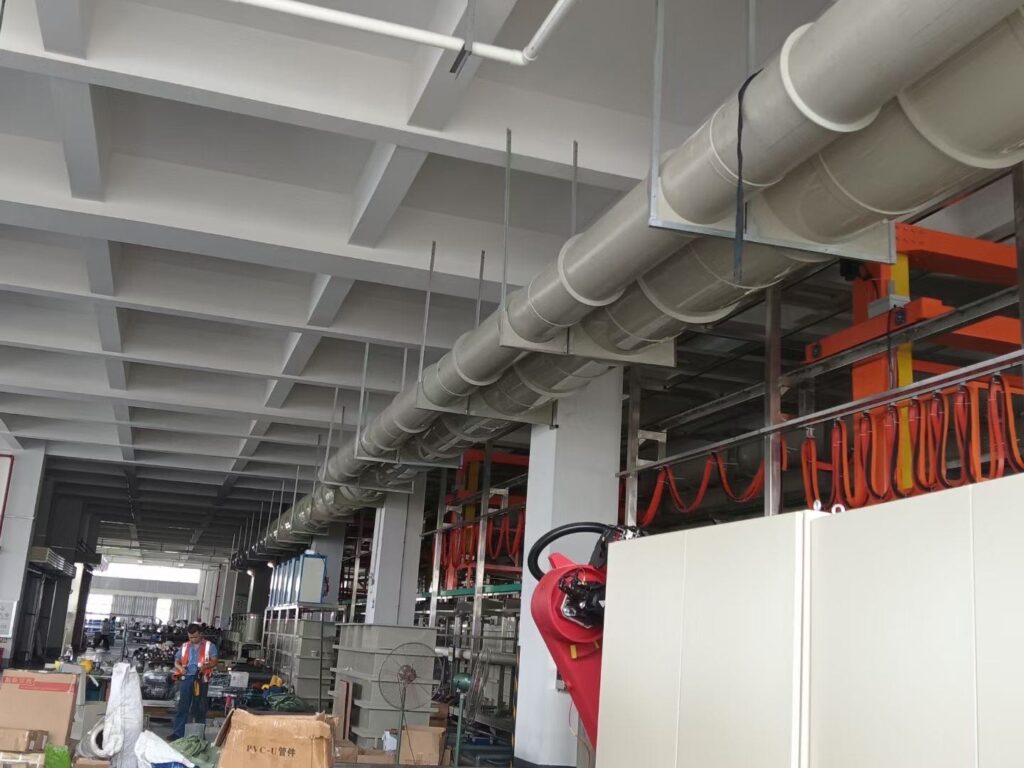
Key Differences Compared: Accuracy, Speed, Cost, Maintenance, and Environmental Suitability
The choice between electric and pneumatic actuation depends on a careful comparison of performance attributes, cost, and environmental suitability. Accuracy is typically superior with electric actuators, which can achieve position repeatability within ±1% or better using closed-loop control. Pneumatic actuators, especially those without positioners, may have repeatability of ±3% to ±5%, though high-precision pneumatic positioners can narrow this gap. Speed favors pneumatic actuators, with response times 5 to 10 times faster than electric actuators — a critical advantage for emergency isolation and rapid process control.
Cost considerations vary by application. Electric actuators generally have lower initial costs for small to medium dampers under 100 Nm torque and require only electrical wiring, eliminating the need for compressed air infrastructure. Pneumatic actuators may have higher initial costs for small dampers but become cost-competitive or superior for large dampers requiring high torque. Maintenance requirements differ significantly: electric actuators are largely maintenance-free for years, with only periodic inspection of connections and seals, while pneumatic actuators require regular inspection of air lines, filters, and solenoid valves to prevent moisture or debris from causing sluggish operation. Environmental suitability also varies: electric actuators are sensitive to extreme temperatures, humidity, and corrosive atmospheres unless specifically rated for harsh conditions, while pneumatic actuators are inherently robust in dirty, hot, or explosive environments where electric motors might fail. The following table provides a direct comparison:
| Factor | Electric Actuator | Pneumatic Actuator |
|---|---|---|
| Accuracy | Excellent (±1%) | Good to excellent (±1–5%) |
| Speed | Slow (15–60 sec) | Fast (1–5 sec) |
| Initial Cost (small dampers) | Lower | Higher |
| Initial Cost (large dampers) | Higher | Lower |
| Maintenance | Low (periodic inspection) | Moderate (air system upkeep) |
| Environmental Suitability | Sensitive to temp, moisture | Robust in harsh conditions |
| Infrastructure Required | Electrical wiring only | Compressed air system |
Choosing the Right Actuator for Your Motorized Air Damper Valve Application
Application-Based Selection Guide: HVAC, Industrial Process, Fire and Smoke Control, and Cleanroom Systems
Different applications have distinct requirements that favor either electric or pneumatic actuation. In commercial HVAC systems — including office buildings, hospitals, hotels, and retail spaces — electric actuator air damper valves dominate due to their compatibility with BMS integration, quiet operation, and ease of installation. Variable air volume systems, economizer dampers, and zone control dampers all benefit from the precise modulation capability and digital communication features of electric actuators, as guided by ASHRAE Standard 90.1 for energy efficiency and SMACNA duct construction standards for system design. In industrial process applications — including power plants, chemical facilities, and manufacturing plants — pneumatic actuator air damper valves are often preferred for their high torque output, rapid response, and suitability for harsh environments where dust, temperature extremes, and corrosive atmospheres would challenge electric actuators.
Fire and smoke control systems present a unique case where both actuator types are used, but with different considerations. Pneumatic spring-return actuators are the gold standard for life safety dampers because they provide inherent fail-safe operation — the damper automatically closes upon loss of air supply, regardless of electrical power status. This requirement is codified in NFPA 92 for smoke control systems and the International Building Code (IBC). Electric actuators can also serve in fire and smoke control applications when equipped with battery backup or mechanical spring-return mechanisms, but they require more complex installation and periodic testing of backup power systems. Cleanroom systems used in pharmaceutical, semiconductor, and biotech facilities typically favor electric actuators for their clean operation, precise control, and compatibility with automated monitoring systems that track damper position and air quality parameters.
Decision Checklist: Air Supply Availability, Control System Integration, Budget, and Safety Requirements
Selecting the optimal actuator type requires a systematic evaluation of four key factors. Air supply availability is the first checkpoint: if a compressed air system already exists in the facility, pneumatic actuation becomes a straightforward choice. If no compressed air is available, the cost of installing a compressor, air treatment equipment, and distribution piping must be factored into the decision — often making electric actuation more economical. Control system integration is the second factor: if the application requires integration with a BMS using digital protocols like BACnet or Modbus, electric actuators provide native support. For simple on/off control or applications where the damper is controlled by a standalone controller, both actuator types are viable.
Budget considerations must include not only the initial purchase price but also installation costs, energy consumption, and lifecycle maintenance. Electric actuators typically have lower installation costs for small to medium dampers but may require more expensive controllers for advanced functionality. Pneumatic actuators require investment in compressed air infrastructure but may offer lower lifecycle costs for large dampers in harsh environments. Safety requirements are paramount for life safety applications: fire and smoke control dampers must meet NFPA and IBC codes, which mandate fail-safe operation. Pneumatic spring-return actuators inherently satisfy this requirement, while electric actuators must be specifically equipped with fail-safe mechanisms. The following checklist summarizes the decision process:
| Decision Factor | Electric Actuator Preferred | Pneumatic Actuator Preferred |
|---|---|---|
| Compressed Air Available? | No | Yes |
| Control Integration Needed? | BMS / digital protocols | Simple on/off or local control |
| Budget Priority | Lower initial cost | Lower lifecycle cost for large dampers |
| Response Speed Critical? | No (15–60 sec acceptable) | Yes (1–5 sec required) |
| Fail-Safe Required? | With backup power/spring | Inherent spring-return |
| Environment | Clean, controlled temperature | Harsh, dirty, explosive, extreme temp |
Installation, Wiring, and Commissioning Best Practices for Electric and Pneumatic Air Damper Valve Actuators
Proper installation and commissioning are essential to ensure that motorized air damper valves deliver the performance, reliability, and safety required by the application. For electric actuator air damper valves, installation begins with verifying that the actuator torque rating exceeds the calculated torque requirement for the damper at maximum differential pressure. The actuator must be mounted securely to the damper frame using the provided hardware, with the drive shaft properly aligned to the damper shaft to avoid binding or uneven wear. Electrical wiring must comply with local codes and manufacturer specifications, with power wiring sized for the actuator’s current draw and control wiring shielded to prevent interference in noisy environments. Compliance with UL 60730 for automatic controls and ISA 72.02.01 for industrial automation ensures safety and reliability.
Commissioning electric actuators involves verifying that the damper travels through its full stroke without obstruction, that the position feedback accurately reflects the actual blade position, and that the control signal response is linear and repeatable. For BMS integration, the actuator’s communication settings must be configured to match the controller per the BACnet protocol standard. For pneumatic actuator air damper valves, installation requires careful attention to the compressed air supply: air lines must be sized for adequate flow, filters and regulators must be installed to remove moisture and debris, and the air pressure must be set to the manufacturer’s specification. The actuator must be mounted with adequate clearance for the cylinder and spring housing, and the air lines must be routed to avoid kinking or abrasion.
Commissioning pneumatic actuators involves verifying that the air supply is clean and at the correct pressure, that the solenoid valves switch air flow correctly, and that the damper moves smoothly through its stroke. For spring-return actuators, the fail-safe action must be tested by interrupting the air supply and confirming that the damper moves to the designated safe position. Both electric and pneumatic actuators benefit from post-commissioning documentation, including wiring diagrams, air line schematics, and calibration records, which are essential for future maintenance and troubleshooting. Manufacturers such as https://ppairvalve.com/ provide detailed installation guides and commissioning procedures for their motorized air damper valve products, ensuring that customers can achieve optimal performance from day one.