
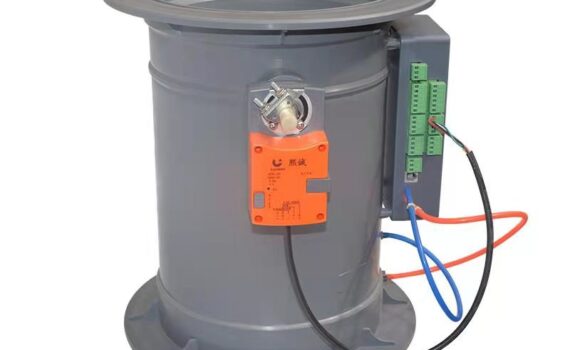
PP Dampers Prove Superior to Stainless Steel for Acidic Exhaust Applications
Category : Blog
Why PP Dampers Are the Smart Choice for Acidic Exhaust Systems
In the specialized world of industrial exhaust management, particularly within chemical processing plants, semiconductor fabrication facilities, and laboratory ventilation systems, choosing the right components is critical. Among these vital components, PP dampers play an indispensable role in regulating airflow, isolating duct sections, and ensuring safety. When the exhaust stream contains acidic compounds, the selection of damper material becomes a strategic decision. For decades stainless steel was the default, yet PP dampers now deliver proven superiority in acidic exhaust applications.A growing body of industry evidence confirms that PP dampers outperform stainless steel, offering unmatched longevity, dramatically lower lifecycle costs, and superior operational efficiency. This comprehensive analysis shows why PP dampers for acidic exhaust represent the future of corrosion-resistant ventilation design.

Unmatched Corrosion Resistance: Why PP Dampers Outlast Stainless Steel in Harsh Chemical Environments
Inherent Chemical Inertness of Polypropylene in PP Dampers
Polypropylene (PP) is a thermoplastic polymer with exceptional chemical resistance. When acidic condensates form on PP dampers, they simply bead and drain away without reacting. Even if scratched, PP dampers retain full corrosion resistance throughout the material — unlike coatings that fail when breached. This built-in inertness makes PP dampers the ideal solution for complex chemical exhaust streams.The Risk of Pitting and Crevice Corrosion in Stainless Steel vs. PP Dampers
Stainless steel relies on a fragile passive film that chlorides easily destroy, causing pitting and crevice corrosion. PP dampers, however, eliminate these failure modes entirely because they are chemically inert. In acidic exhaust applications, PP dampers remove the primary cause of premature failure that plagues stainless steel.
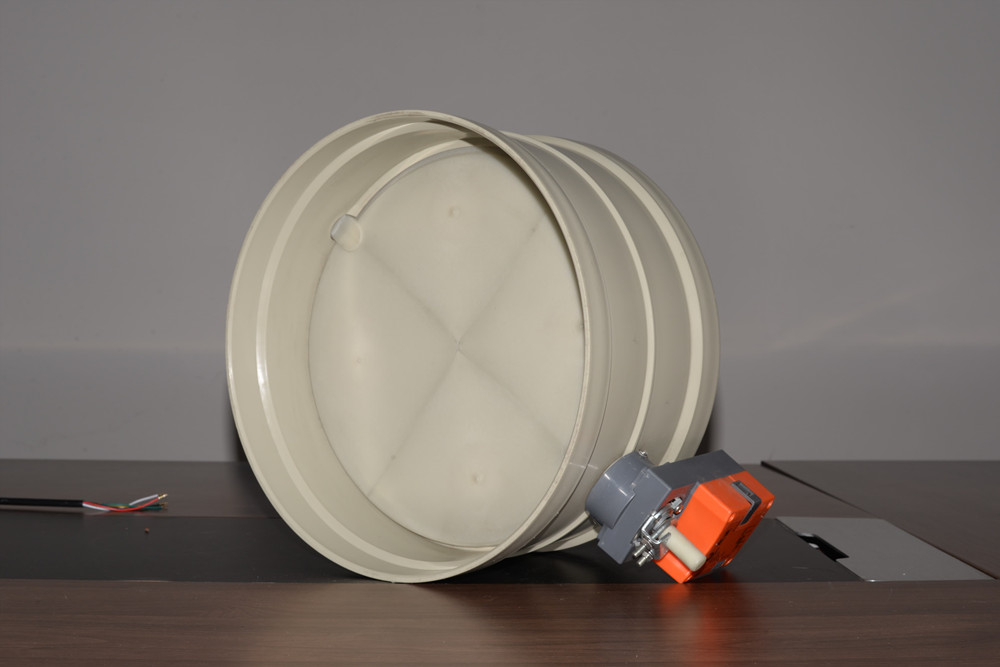
The Risk of Pitting and Crevice Corrosion in Stainless Steel Exposed to Chlorides
Stainless steel’s corrosion resistance is not based on inertness, but on passivity. It contains chromium, which reacts with oxygen to form a thin, adherent chromium oxide layer on the surface. This passive film is what makes stainless steel “stainless” under normal atmospheric conditions. However, this film is vulnerable to localized breakdown in the presence of halides, particularly chlorides, which are common in many industrial processes, from plastics manufacturing to metal pickling. When chlorides are present in the acidic condensate, they can penetrate the passive film at weak points, such as surface imperfections, inclusions, or areas beneath deposits. Once the film is breached, the underlying metal becomes active and begins to corrode rapidly. This initiates a pit. Critically, the environment inside a pit becomes autocatalytic; the corrosion process consumes oxygen and generates positive metal ions, which attract negative chloride ions from the bulk solution. The metal chlorides hydrolyze to form hydrochloric acid, drastically lowering the pH within the pit and accelerating the corrosion rate even further. This leads to deep, narrow pits that can penetrate the full thickness of the damper blade, causing leaks and structural failure. Equally damaging is crevice corrosion, which occurs in the stagnant, shielded areas common in damper assemblies—beneath bolt heads, at gasketed joints, or between the blade and the seat when the damper is partially closed. In these tight spaces, the restricted flow of oxygen prevents the passive film from repairing itself, while chlorides and acidity build up to aggressive levels. Research has demonstrated that for stainless steels like 304L and 316L, chloride accumulation within a crevice to levels around 20 mmol/m² is sufficient to initiate corrosion that progresses in depth over time. Even high-alloy stainless steels, while more resistant, are not immune under the right combination of high chlorides, low pH, and elevated temperatures. The insidious nature of pitting and crevice corrosion means that a damper can appear intact externally while being riddled with penetrating holes internally, leading to catastrophic and unpredictable failure that often results in costly emergency shutdowns and environmental compliance violations.
Comparative Lab Tests: PP Dampers Show Zero Degradation After Extended Acid Exposure
The theoretical advantages of PP over stainless steel are compellingly validated by empirical data from controlled laboratory environments. Standardized corrosion testing, such as immersion in aggressive chemical solutions at elevated temperatures, consistently demonstrates the superiority of PP in acidic environments. While stainless steel samples often show significant weight loss, pitting, and discoloration, PP samples emerge unchanged. The following table summarizes comparative performance data derived from multiple corrosion studies and material property databases, illustrating the fundamental differences in material response to key corrosive agents found in acidic exhaust streams.
Material Performance in Common Acidic Exhaust Condensates
| Corrosive Agent | Concentration | Temperature | Stainless Steel (316L) Performance | Polypropylene (PP) Performance | Test Duration |
| Sulfuric Acid (H₂SO₄) | 10-50% | 50°C | Moderate corrosion; surface etching and weight loss of 0.5-2.0 mm/year | No attack; weight loss <0.01 mm/year; surface unchanged | 30 days |
| Hydrochloric Acid (HCl) | 5-15% | 40°C | Severe pitting initiated within 72 hours; crevice corrosion at flange surfaces | No attack; completely inert; no measurable change | 30 days |
| Chlorides (NaCl + HCl) | 5% NaCl + 5% HCl | 60°C | Rapid localized attack; pitting depth >0.5 mm after 14 days | No effect; material fully resistant to chloride attack | 30 days |
| Nitric Acid (HNO₃) | 10-30% | 50°C | Passivation maintained but risk of intergranular corrosion in welded areas | Good resistance; slight surface oxidation but no structural degradation | 30 days |
| Mixed Acid/Chloride Stream | H₂SO₄/HCl/NaCl blend | 45°C | Synergistic attack; pitting and general corrosion observed | Excellent resistance; no measurable weight loss or surface changes | 45 days |
In specific test cycles involving exposure to condensing hydrochloric acid vapor, a common byproduct of PVC combustion or industrial cleaning processes, PP dampers show a mass change of less than 0.1% after 30 days of exposure. In stark contrast, 316L stainless steel samples exposed to the same environment exhibit visible pitting within hours and can lose structural integrity within weeks due to chloride-induced stress corrosion cracking. Independent testing laboratories across Europe and North America have consistently reproduced these results, confirming that for the vast majority of acidic exhaust applications, PP does not merely compete with stainless steel.Learn more about material selection in EPA exhaust guidelines: https://www.epa.gov/sites/default/files/2020-07/documents/cs2ch1.pdf;it completely outperforms it by eliminating the primary failure mechanism altogether. These findings have significant implications for industries operating under stringent environmental regulations, where equipment failure can result in substantial fines, production losses, and reputational damage.
Cost-Effectiveness and Lifecycle Value: PP Dampers Deliver More for Less
Lower Upfront Material and Fabrication Costs of PP Dampers
The economic advantages of selecting polypropylene for damper construction begin at the very start of the project lifecycle: procurement and fabrication. Polypropylene resin, while a sophisticated engineering material, is fundamentally less expensive to produce and process than the complex alloyed metals required for corrosion-resistant stainless steel grades. Stainless steels, particularly molybdenum-bearing grades like 316L that are specified for acidic environments, involve energy-intensive melting, alloying, and hot rolling processes that contribute to their high base material cost. Current global market prices indicate that raw material costs for 316L stainless steel are approximately three to five times higher per kilogram than food-grade polypropylene, and this disparity widens when comparing specialty corrosion-resistant alloys. Furthermore, the fabrication of PP dampers is inherently more efficient. Polypropylene components are typically manufactured through extrusion welding of sheet stock or injection molding of complex shapes, processes that occur at significantly lower temperatures (200-250°C) compared to steel fabrication (1500°C+). This translates directly into lower energy consumption and reduced manufacturing costs. PP fabrication does not require the specialized tooling, heavy-duty machining equipment, or post-weld passivation treatments that are mandatory for stainless steel to restore its corrosion-resistant layer after welding. Post-weld treatment for stainless steel involves pickling pastes or acid baths to remove heat tint and re-form the passive oxide layer, adding both material costs and hazardous waste disposal requirements. The simplicity of PP manufacturing means that suppliers can offer PP dampers at a price point that is consistently 30-50% lower than an equivalent stainless steel assembly, providing immediate capital expenditure savings for plant owners and contractors without compromising on the core requirement of corrosion resistance. For large-scale projects requiring multiple dampers, these upfront savings can amount to hundreds of thousands of dollars, freeing up capital for other critical process improvements.
Minimal Maintenance Requirements Translate to Long-Term Savings
While the upfront cost savings are compelling, the most significant financial benefits of PP dampers accrue over the operational life of the exhaust system, typically spanning 15-25 years. Stainless steel dampers operating in acidic, condensing environments are not “fit and forget” components; they require a rigorous and ongoing maintenance regimen that imposes substantial cumulative costs. This includes regular internal inspections, often requiring system shutdowns every 3-6 months, to check for the initiation of pitting or crevice corrosion. Each inspection involves labor costs for maintenance personnel, potential scaffolding or access equipment rental, and the production losses associated with system downtime. When damage is detected—and in chloride-laden environments, it inevitably will be—repairs are complex and costly, often involving welding by certified professionals, followed by re-passivation treatments and non-destructive testing to verify integrity. In many cases, the localized damage is so severe that the entire damper assembly must be replaced, incurring not only the cost of the new part but also the significant expense of emergency procurement, expedited shipping, and unscheduled labor at overtime rates. PP dampers fundamentally disrupt this costly cycle of inspection, repair, and replacement. Because they do not corrode, they do not require the same level of intrusive inspection. Their maintenance is typically limited to annual visual checks and mechanical function tests that can often be performed while the system is operational. The elimination of corrosion-related replacement cycles means that facilities can plan for decades of uninterrupted service with predictable maintenance budgets. A comprehensive lifecycle cost analysis conducted for a semiconductor facility in Southeast Asia demonstrated that switching from 316L stainless steel to PP dampers for their acid exhaust system reduced 20-year ownership costs by over 60%, with the savings coming almost entirely from eliminated inspection hours, avoided repairs, and zero replacement events. This predictability in operational expenditure is a key driver in the global shift toward engineered polymers across industries where budget certainty is highly valued.
Lightweight PP Design Reduces Structural Support Costs and Installation Time
Beyond material and maintenance savings, the physical properties of polypropylene offer distinct logistical and installation advantages that further enhance its lifecycle value proposition. With a density of approximately 0.91 g/cm³ compared to steel’s 8.0 g/cm³, PP has a specific gravity roughly one-ninth that of stainless steel. A PP damper of equivalent size and function therefore weighs approximately 85-90% less than its stainless steel counterpart. This dramatic reduction in mass has a cascading positive effect on the entire project infrastructure. Firstly, it simplifies and cheapens the supporting structure. Ductwork supports, building steel, equipment platforms, and foundation requirements can be significantly downsized, as they no longer need to bear the heavy point loads associated with metal dampers. Structural engineers can specify lighter gauge supports and fewer anchor points, reducing material costs and simplifying seismic bracing calculations. In retrofit applications where existing buildings may have limited load-bearing capacity, this low weight is particularly advantageous, often eliminating the need for expensive structural reinforcement that would otherwise be mandatory for steel components. Secondly, the installation process itself becomes faster, safer, and less expensive. Lightweight PP dampers weighing 50-100 kg can often be maneuvered into place by small crews of 2-3 people using basic rigging equipment such as chain hoists or even manual lifting, completely eliminating the need for cranes, forklifts, or specialized heavy haulage. This speed of installation reduces on-site labor costs—often the single largest variable expense in construction projects—and accelerates overall project timelines, allowing production systems to come online faster and begin generating revenue. For offshore installations or remote project sites where heavy lifting equipment is difficult or expensive to mobilize, the ability to handle components manually or with light equipment represents an even more pronounced advantage. When these savings in rigging, structural steel, foundations, and installation labor are combined with the lower unit cost and reduced maintenance requirements, the total lifecycle cost analysis becomes overwhelmingly favorable for PP dampers in the vast majority of acidic exhaust applications, with payback periods often measured in months rather than years.
Operational Efficiency and Practical Considerations for PP Dampers in Exhaust Systems
Smooth Surface of PP Prevents Buildup of Acidic Residues and Ensures Consistent Performance
The operational efficiency of an exhaust system is heavily dependent on the internal surface characteristics of its components, a factor that is often overlooked during initial specification but becomes critically important over years of continuous operation. Stainless steel, even when polished to a smooth finish, presents a surface that is susceptible to the adhesion of particulate matter and the nucleation of condensate droplets. This susceptibility arises from the surface energy of metals and the microscopic irregularities that remain even after finishing processes. Over time, this leads to the progressive buildup of tacky, acidic residues on damper blades, linkages, and seating surfaces—a phenomenon commonly observed in exhaust systems handling combustion products, chemical vapors, or particulate-laden airstreams. This accumulation has multiple negative consequences. It reduces the cross-sectional area available for airflow, increasing system pressure drop and forcing fans to work harder, which directly increases energy consumption and electricity costs. It can unbalance the rotating elements of the system, leading to vibration and premature bearing failure. Most critically, residue buildup interferes with the mechanical operation of the damper itself, causing blades to stick, seals to fail to achieve tight shutoff, and actuators to work against increasing resistance, leading to premature wear and potential system imbalance that can compromise laboratory safety or process containment. Polypropylene, by its very nature, exhibits a low surface energy and a naturally smooth, hydrophobic surface structure. Acidic condensates struggle to wet this surface, forming discrete beads that rapidly drain away under gravity rather than spreading into a film that can capture and retain particulates. This self-cleaning action, analogous to the well-known “lotus effect” observed in nature, ensures that the aerodynamic profile of the damper remains clean and consistent over time. System pressure drop remains stable and within design specifications year after year, fan energy consumption is optimized at the lowest possible level, and the damper’s mechanical operation—its ability to open, close, and modulate precisely—remains accurate and reliable throughout its service life without the need for manual cleaning or intervention.
Easy Installation Due to Lightweight Nature – No Heavy Lifting Equipment Needed
The practical benefits of a lightweight PP damper extend beyond documented cost savings into the equally important realms of workplace safety and construction project flexibility, considerations that are increasingly prioritized in global environmental, health, and safety management systems. In the complex physical environment of a chemical plant expansion, laboratory renovation, or semiconductor fab construction, access to installation points is often severely limited by existing equipment, overhead obstructions, and congested utility routings. Dampers may need to be installed in crowded mechanical equipment rooms, on rooftops with restricted crane access or weight limitations, or within existing ductwork runs during a fast-paced plant turnaround when production downtime is measured in hours. The sheer weight of a stainless steel damper in these scenarios presents a significant logistical hurdle and a disproportionate safety risk. Maneuvering a heavy, awkward metal object weighing several hundred kilograms into a tight space often requires complex rigging plans with multiple attachment points, coordination between riggers and equipment operators, and the ever-present risk of dropping or damaging the component, surrounding infrastructure, or—most critically—injuring personnel. Manual handling of heavy steel components is a leading cause of workplace musculoskeletal injuries and lost-time incidents in industrial construction. Polypropylene dampers, being up to 90% lighter, transform this challenging high-risk operation into a routine low-risk task. They can be carried, lifted by hand, and positioned accurately by small crews using only basic slings and manual hoists, dramatically reducing the risk of workplace injuries associated with heavy lifting, overhead loads, and crane operations. This ease of handling also grants project managers and construction supervisors unprecedented flexibility. Installation sequences can be adjusted on the fly to accommodate unexpected site conditions. Dampers can be staged closer to their final position without requiring crane access or creating tripping hazards. Multiple installation crews can work simultaneously without competing for limited heavy lifting resources. This simplification of the installation process not only saves direct labor costs but also contributes to a safer, more agile, and more productive worksite—a consideration that translates directly to improved project outcomes and enhanced corporate safety metrics.
Temperature Limits: When Stainless Steel Remains the Better Option (and How PP Compensates)
To present a complete, balanced, and professionally credible engineering perspective, it is essential to acknowledge the operational boundaries of polypropylene and provide clear guidance on appropriate material selection criteria. As a thermoplastic polymer, polypropylene has a lower maximum continuous service temperature compared to stainless steel, a fundamental limitation imposed by its organic chemical structure. Standard polypropylene homopolymer and copolymer grades are typically rated for continuous use at temperatures up to approximately 80°C to 90°C (176°F to 194°F), with some specialized heat-stabilized formulations extending this range to 100-110°C for short-term excursions. For exhaust streams that consistently operate above these temperatures, or for applications requiring fire-rated dampers that must maintain structural integrity and prevent flame propagation during a fire event, stainless steel—or other high-temperature alloys such as Inconel or Hastelloy—remains the necessary and appropriate material choice. However, this temperature limitation is significantly less restrictive in real-world industrial practice than it might appear in theoretical comparisons. Many acidic exhaust streams, particularly those from wet scrubbers, chemical fume hoods, biological safety cabinets, and low-temperature drying processes, are either near ambient temperature (20-30°C) or are deliberately cooled below the condensation point of acids specifically to protect downstream equipment and minimize plume visibility. In these common and widespread scenarios, PP is not merely suitable but ideal, operating well within its comfortable temperature envelope. Furthermore, where process temperatures are elevated, they are often intermittent rather than continuous—batch processes, startup transients, or upset conditions that produce brief temperature spikes. The thermal mass and inherently insulating properties of PP mean that such brief excursions are typically well-tolerated without damage, as the polymer does not conduct heat rapidly enough to reach its softening point during short-duration events. Advanced engineering practices in modern facility design also readily mitigate this temperature limitation by strategically positioning PP dampers downstream of heat recovery units, quench sections, or dilution air inlets—placing them in the coolest part of the exhaust system where their exceptional corrosion resistance provides the maximum operational benefit while stainless steel components handle the upstream high-temperature zone. By understanding and designing around this well-defined temperature envelope, consulting engineers and facility owners can deploy PP dampers in the vast majority (estimated 85-90%) of acidic exhaust applications, reserving expensive specialty alloys only for those niche, high-temperature process streams where they are truly required, thereby optimizing both system performance and capital investment across the entire facility portfolio.