
HVAC Damper Valve Types: Complete Guide to Choosing the Right One for Your System
Category : Blog
Every HVAC system relies on a network of ductwork to deliver conditioned air where it is needed, but without properly selected damper valves controlling that airflow, even the most efficient equipment cannot deliver consistent comfort, energy savings, or code compliance. HVAC damper valves regulate air volume, isolate zones, protect against fire and smoke spread, and enable economizer cycles that reduce energy consumption—yet many system designers and facility managers treat damper selection as an afterthought. The consequences of poor selection are significant: uneven temperatures across zones, excessive energy waste from uncontrolled air leakage, failed fire safety inspections, and premature equipment replacement costs that far exceed the savings from choosing the cheapest damper available. With dozens of damper types, actuation methods, and material options on the market, understanding the core distinctions between damper categories and matching them to specific system requirements is essential. Whether you are designing a new commercial HVAC installation, retrofitting an existing building, or managing ongoing facility operations, this guide provides a clear framework for evaluating HVAC damper valve types, understanding their functional differences, and making selection decisions that optimize system performance, safety compliance, and total cost of ownership over the equipment lifecycle.
Core Basics of HVAC Damper Valves
What Is an HVAC Damper Valve? Core Function Overview
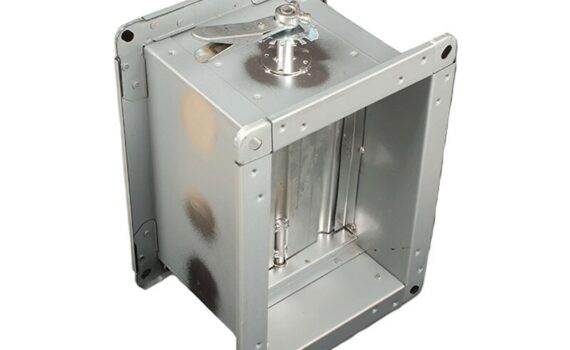
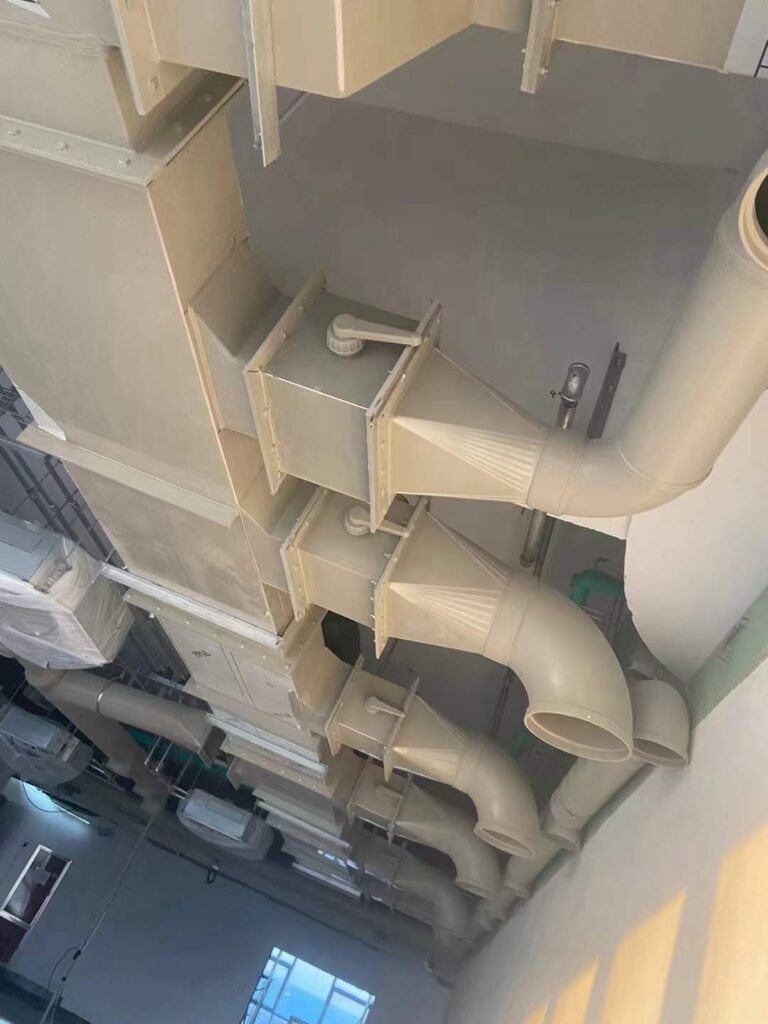
An HVAC damper valve is a mechanical device installed within ductwork that controls airflow by opening, closing, or modulating the passage area through which conditioned or exhaust air travels. At its most fundamental level, a damper consists of one or more blades mounted on a shaft within a frame, connected to an actuator that rotates or slides the blade(s) between open and closed positions. HVAC damper valves serve multiple system functions simultaneously: they regulate supply air volume to individual zones, balance airflow distribution across branch ducts, isolate sections of ductwork for maintenance or emergency purposes, and control outdoor air intake volumes in economizer and ventilation systems. The ASHRAE Handbook—HVAC Systems and Equipment classifies dampers by function, actuation method, and construction, recognizing that each application demands specific performance characteristics. A damper performing simple manual balancing in a residential branch duct has vastly different requirements than a motorized fire damper protecting a high-rise stairwell pressurization system. Understanding this functional diversity is the first step toward selecting the correct HVAC damper valve for any given application.
Why Proper Damper Selection Is Critical for HVAC Performance
Selecting the wrong HVAC damper valve creates cascading performance problems that compound over time. Undersized dampers generate excessive pressure drop, forcing fans to consume more energy while delivering less air to terminal zones. Oversized dampers lose modulation precision at low flow positions, creating control instability and occupant comfort complaints. Dampers with inadequate leakage ratings in economizer applications allow conditioned air to escape continuously, with ENERGY STAR research indicating that economizer damper leakage alone can increase cooling energy consumption by 10 to 25 percent in commercial buildings. In safety applications, the stakes are even higher—fire dampers that fail to close completely or smoke dampers with insufficient leakage ratings can allow flame and toxic gases to propagate through a building, violating fire codes and endangering occupants. The National Fire Protection Association (NFPA) mandates specific damper performance standards for life safety applications, and non-compliance can halt occupancy permits entirely. Proper HVAC damper valve selection is therefore not merely a technical optimization exercise—it is a direct determinant of energy efficiency, occupant safety, regulatory compliance, and long-term operational cost.
Key Factors That Impact Damper Valve Long-Term Reliability
Long-term reliability of HVAC damper valves depends on several interconnected factors that extend well beyond initial purchase price. Actuator quality is paramount—motorized actuators must deliver consistent torque over hundreds of thousands of cycles without drift or failure, and pneumatic actuators must maintain seal integrity under continuous pressure loading. Blade and shaft bearing design determines resistance to wear-induced play, which gradually increases leakage rates over the damper’s service life. Frame construction rigidity prevents warping under duct pressure loads and thermal cycling, maintaining blade-to-frame seal contact. Environmental exposure conditions—temperature extremes, humidity, chemical contaminants in the airstream, and vibration from adjacent equipment—all accelerate degradation of seals, bearings, and surface coatings. The U.S. Department of Energy emphasizes that HVAC component reliability directly correlates with maintenance accessibility, recommending that dampers be installed with sufficient clearance for inspection, lubrication, and actuator replacement without ductwork disassembly. Selecting HVAC damper valves from manufacturers with documented lifecycle testing data, rather than relying solely on catalog specifications, provides the most reliable predictor of long-term field performance.
Common Types of HVAC Damper Valves Explained
Zone Control Dampers: Precision Airflow Regulation for Zoned Systems
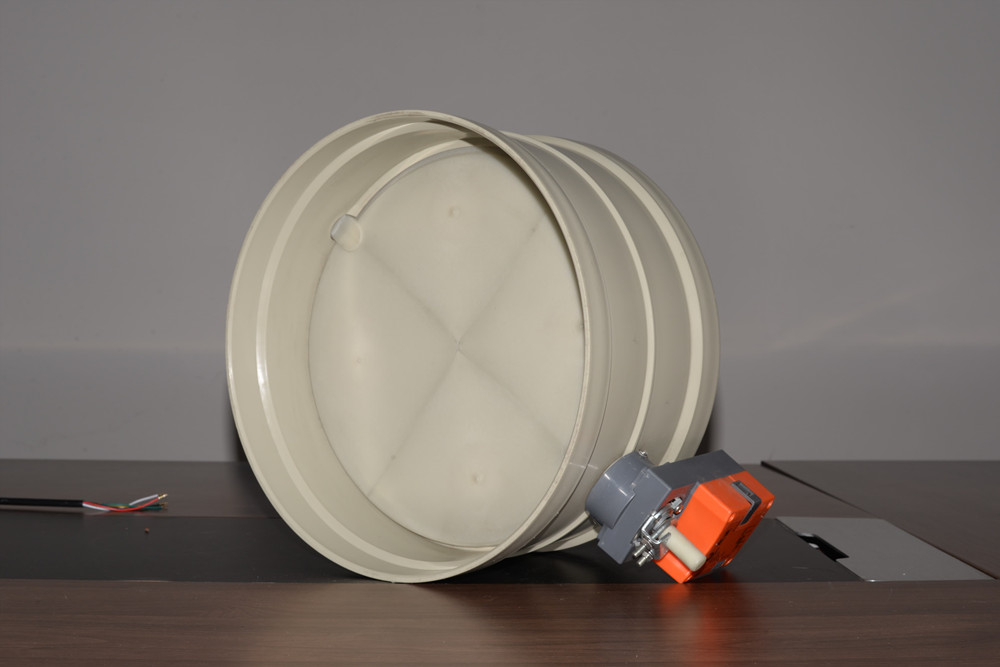
Zone control dampers are motorized HVAC damper valves installed at branch duct takeoffs to regulate airflow delivery to individual temperature zones within a building. Each damper receives commands from a zone controller that modulates blade position based on thermostat demand, allowing a single air handler to serve multiple zones with independent temperature setpoints. These dampers are typically round or rectangular to match branch duct geometry and use low-torque actuators optimized for frequent modulation rather than full open-close cycling. Effective zone control dampers feature low-leakage blade seals—typically rated to AMCA Class I or II—to prevent unconditioned air from migrating into satisfied zones when the damper is closed. The Building Efficiency Research Division estimates that properly implemented zone control with quality HVAC damper valves can reduce HVAC energy consumption by 20 to 30 percent compared to single-zone systems, while simultaneously improving occupant comfort by eliminating hot and cold spots. For multi-zone commercial buildings, zone control dampers represent one of the highest-return investments in the entire HVAC system.
Fire & Smoke Dampers: Safety-Critical Solutions for Code Compliance
Fire dampers and smoke dampers are specialized HVAC damper valves designed to maintain the fire-resistance rating of walls, floors, and barriers where ductwork penetrates fire-rated assemblies. Fire dampers contain fusible links that melt at a predetermined temperature—typically 74°C or 165°C—triggering spring-loaded blade closure that seals the duct opening against flame and hot gas passage. Smoke dampers are actuated by smoke detection signals from the building fire alarm system and close to prevent smoke migration through ductwork before temperatures reach fire damper activation thresholds. Combination fire-smoke dampers integrate both functions into a single assembly, providing dual protection where codes require both capabilities. All fire and smoke dampers must be tested and listed to UL 555 (fire dampers) and UL 555S (smoke dampers) standards, and installed strictly in accordance with their listing requirements—including correct orientation, clearance to combustibles, and access provisions for inspection. These HVAC damper valves are non-negotiable life safety components, and their selection, installation, and maintenance must comply with NFPA 80, NFPA 105, and local adopted building codes without exception.
Manual vs. Automatic Dampers: Core Operational Differences
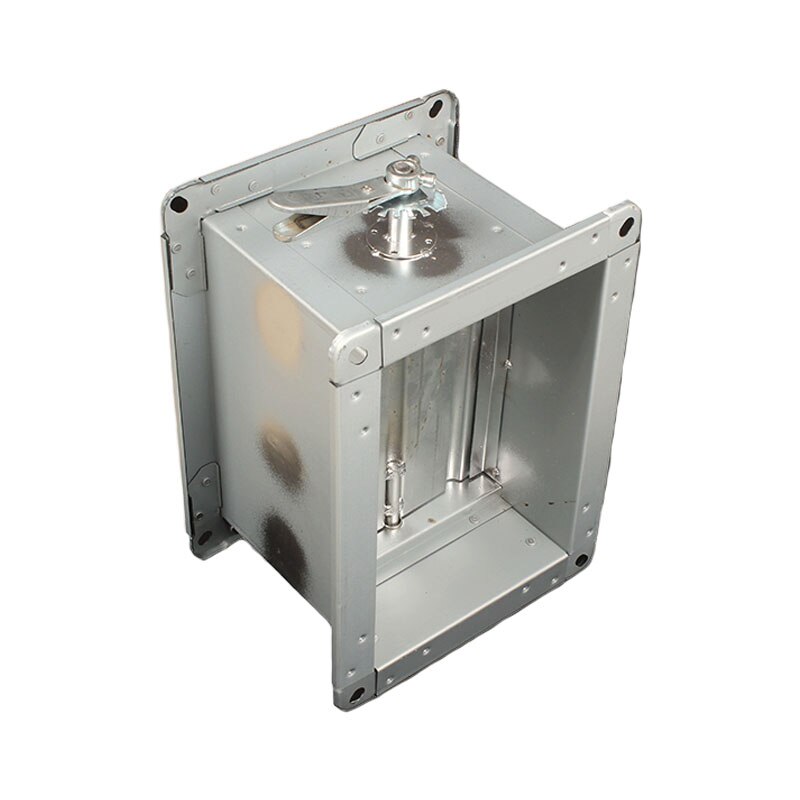
HVAC damper valves are broadly divided into manual and automatic categories based on their actuation method. Manual dampers use a lever, wing nut, or hand quadrant positioned outside the duct to set blade position, providing simple and cost-effective airflow balancing for applications where set-and-forget operation is acceptable—residential branch ducts, small commercial exhaust systems, and static pressure relief applications. Automatic dampers employ electric motor, pneumatic cylinder, or spring-return actuators that respond to control system signals, enabling dynamic airflow modulation in building automation systems, fire safety sequences, and demand-controlled ventilation. The selection between manual and automatic HVAC damper valves depends on whether the application requires remote control, automated response to safety signals, or integration with building management systems. Manual dampers offer zero energy consumption and minimal failure modes but cannot respond to changing conditions. Automatic dampers provide responsive control and system integration capabilities but require power supply, control wiring, and periodic actuator maintenance. In most commercial HVAC systems, a combination of both types is deployed—automatic dampers at major control points and manual dampers for fixed balancing adjustments.
How to Choose the Right Damper Valve for Your System
Match Damper Type to Your HVAC System & Application Scenario
Effective HVAC damper valve selection begins with clearly defining the damper’s functional role within the system. For airflow modulation in variable air volume (VAV) systems, opposed-blade dampers provide superior linear flow characteristics compared to parallel-blade designs. For tight isolation in laboratory exhaust or healthcare isolation room applications, bubble-tight dampers with inflatable blade seals deliver zero-leakage performance that standard HVAC damper valves cannot achieve. For outdoor air economizer systems, barometric or gravity dampers with low-leakage ratings ensure that free cooling opportunities are captured without excessive energy waste. Fire and smoke damper selection must reference the specific fire-resistance rating of the penetrated assembly and the applicable code edition. Documenting the required function, operating conditions, control integration needs, and applicable code requirements in a formal damper schedule—before reviewing manufacturer catalogs—prevents the common error of selecting dampers based on price alone and discovering functional deficiencies after installation.
Size, Pressure Rating & Material Compatibility Checks
Proper HVAC damper valve sizing requires matching the damper face area to the duct cross-section while maintaining face velocities within acceptable ranges—typically 1,000 to 1,500 feet per minute for supply ducts and 500 to 1,000 FPM for return and exhaust applications. The damper frame and blade assembly must be rated for the maximum static pressure encountered in the duct system, including transient pressure spikes during fan startup or emergency ventilation events. Material selection must account for the airstream conditions: galvanized steel is standard for general HVAC applications, stainless steel is required for high-humidity or mildly corrosive environments, and coated or lined dampers are necessary for kitchen exhaust or chemical fume handling ducts. Actuator torque must be calculated based on blade area, operating pressure differential, and seal friction, with a minimum 50 percent safety factor applied. Oversizing actuators adds unnecessary cost, while undersizing actuators results in incomplete closure and increased leakage—both avoidable through proper engineering calculation during the HVAC damper valve specification process.
Total Cost of Ownership: Upfront Cost, Maintenance & Lifespan
Evaluating HVAC damper valves on total cost of ownership rather than purchase price alone reveals that the cheapest damper is rarely the most economical over its service life. A high-quality damper with a premium actuator may cost 30 to 50 percent more upfront but deliver 15 to 20 years of maintenance-free operation, while a budget damper may require actuator replacement within 3 to 5 years and seal replacement every 2 to 3 years—each service event requiring ductwork access, system shutdown, and technician labor. Energy cost implications are equally significant: a damper with AMCA Class I leakage ratings versus Class III can save thousands of dollars annually in a large commercial building through reduced fan energy and improved zone control precision. Factor in the cost of code compliance failures—failed fire damper inspections can trigger occupancy restrictions, liability exposure, and insurance complications—and the value premium for quality HVAC damper valves becomes clear. ENERGY STAR recommends evaluating dampers on a 20-year lifecycle cost basis that includes purchase price, installation labor, energy performance, maintenance frequency, and replacement cost to identify the true lowest-cost option.
HVAC Damper Valve Selection Matrix
| Application | Recommended Damper Type | Actuation | Leakage Class | Key Standard |
|---|---|---|---|---|
| Zone Temperature Control | Opposed-Blade Motorized | Electric Modulating | AMCA Class I | ASHRAE 90.1 |
| Fire Barrier Penetration | Curtain or Multi-Blade Fire | Fusible Link (Spring) | UL 555 Listed | NFPA 80 |
| Smoke Control | Curtain Smoke Damper | Electric / Pneumatic | UL 555S Listed | NFPA 105 |
| Outdoor Air Economizer | Parallel-Blade Motorized | Electric Modulating | AMCA Class I–II | ASHRAE 90.1 |
| Exhaust Balancing | Opposed-Blade Manual | Lever / Quadrant | AMCA Class III | SMACNA |
| Kitchen / Corrosive Exhaust | Stainless Lined Louver | Electric On-Off | Application-Specific | IMC / Local Code |
Sources: ASHRAE Handbook, NFPA Standards, ENERGY STAR, UL Product Certification.
For a complete range of HVAC damper valves—including zone control, fire and smoke rated, and custom-fabricated models for specialty applications—explore our complete product catalog.